Audio
Listen to the article
- Montenegro plans to finish harmonising with EU norms by year-end and target membership in 2028 — a timetable Ursula von der Leyen calls “within reach”.
- With 630,000 people and limited farm exports, its accession would carry modest budget and migration costs, but Iceland’s August 29th no-vote has cooled the enlargement mood.
- France is the biggest hurdle: a referendum or three-fifths of both houses is required, only 35% of French back enlargement, and a possible Marine Le Pen presidency looms.
Podgorica & Brussels
Across the Western Balkans, officials joke bitterly about EU accession: capitals feign overhauls while Brussels feigns enthusiasm. Russia’s full-scale invasion of Ukraine in 2022 revived the enlargement agenda, and Montenegro — home to only 630,000 people — now senses an opening for EU accession. That small size would impose modest costs on EU assistance budgets, its farm shipments are too limited to alarm European growers, and it offers little prospect of large-scale worker movement.
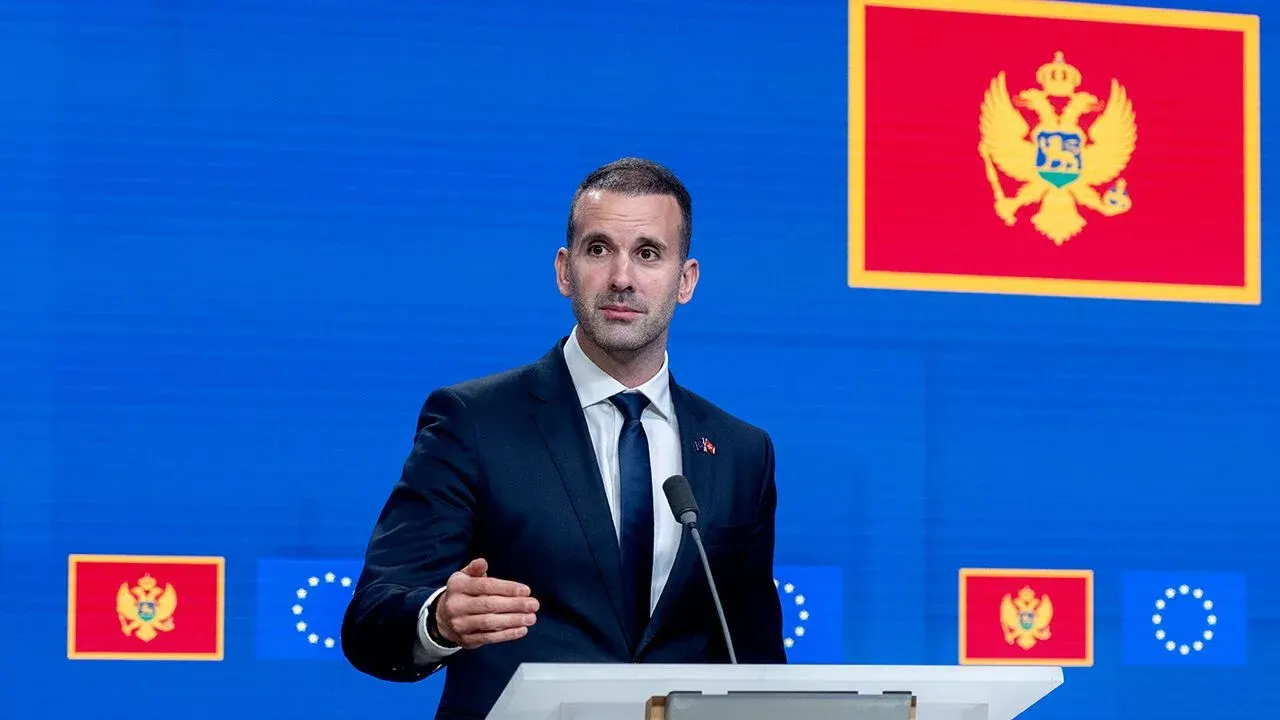
Montenegro’s government plans to finish harmonising with EU norms before year-end, targeting EU membership in 2028. At a June summit hosted by Montenegro, European leaders competed to commend its headway, and Ursula von der Leyen, president of the European Commission, described that timetable as “within reach”.
Yet Iceland’s August 29th vote against reviving its accession negotiations cooled the atmosphere. Some had hoped an application from a wealthy northern state might create momentum for enlargement. Instead, candidates such as Montenegro must now convince Europeans that admitting poorer south-eastern states serves their own interests.
Montenegro population
Target membership year
French who back EU enlargement
Where the Western Balkans stand — and why Montenegro leads
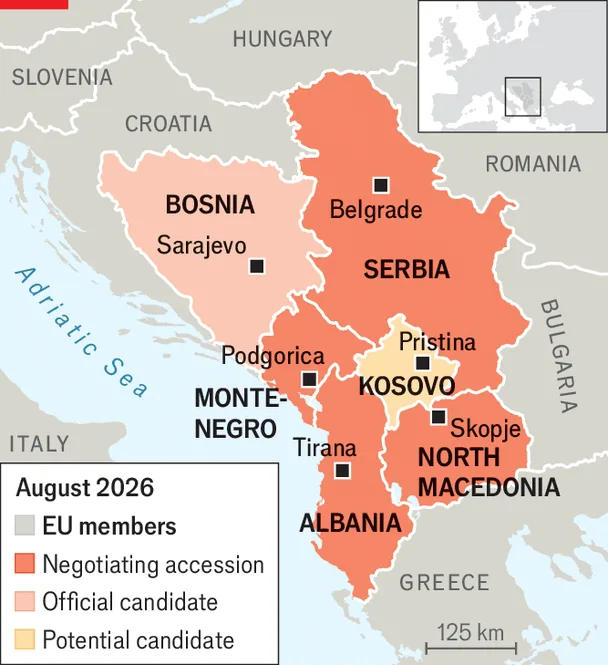
Among Western Balkan contenders for EU accession, Montenegro leads the field. Albania follows, while Kosovo and Bosnia & Herzegovina show scant advancement. North Macedonia remains stalled by friction with neighbouring Bulgaria. Serbia, the largest of the six, received a negative signal from eight EU members in July, largely over authoritarian rule.
| Candidate | Status signal | Key factor cited |
|---|---|---|
| Montenegro | Front-runner | Harmonisation by year-end, 2028 target |
| Albania | Next behind | Progressing, behind Montenegro |
| North Macedonia | Stalled | Friction with Bulgaria |
| Serbia | Negative signal, July | Concerns over authoritarian rule (eight members) |
| Kosovo | Scant advancement | Limited progress |
| Bosnia & Herzegovina | Scant advancement | Limited progress |
Regional rivalry is also visible. On August 27th Montenegro’s prime minister, Milojko Spajic, said that two neighbouring countries — clearly meaning Serbia and Albania — were trying to slow the country’s EU accession, presumably out of jealousy.
Reforms at home: co-operation, scepticism and organised crime
Following Yugoslavia’s dissolution, Montenegro spent decades under a single dominant party that steered it toward independence and NATO entry. In 2020 that force lost power to a coalition that included pro-Serb factions. Pro-Europeans worried Belgrade would dictate the new government’s external policy. That has not happened; relations between the countries are poor. The prospect of EU accession has instead led parties to co-operate on reforms.
Critics argue the reforms are superficial, adding that EU leaders no longer mention Montenegro’s influential narcotics-trafficking networks. For pro-enlargement Europeans, the stakes go beyond Podgorica: failure by such a small state would extinguish hope for Ukraine and others seeking to join.
The French hurdle: referendum, parliament and public opinion
The biggest risk to Montenegro’s EU accession is France. President Emmanuel Macron supports accession and concluded several political and commercial accords during his Montenegro trip in June, including one designed to cultivate a positive picture of Montenegro in France.
But French law requires a referendum or three-fifths of both houses of parliament to approve the accession of a new member. According to Eurobarometer, just 35% of the French support expanding the union. And Mr Macron will leave office next year. He may be succeeded by Marine Le Pen of the populist-right National Rally, who firmly opposes enlargement.
A majority in favour of ratifying accession for any future members simply does not exist in France’s parliament.
Jovana Marovic · former minister of European affairs in Montenegro
Ms Marovic is not optimistic. “This is an extremely unpopular thing to say,” she continues. “The atmosphere in Montenegro is almost euphoric, as if EU accession were already a done deal.” She thinks there is time for her country to build support for accession among EU members. For the moment, many are as wary of letting in new countries as the Icelanders were about joining.
EU enlargement requires unanimous approval by existing members and ratification domestically. In France that means a referendum or a three-fifths majority of both houses meeting in Congress. Poll figures cited are from Eurobarometer.
To follow the major stories from Europe, subscribe to Café Europa, our weekly subscriber-only newsletter.
This article appeared in the Europe section of the print edition under the headline “Pick me” in the September 5th 2026 edition. Discover stories from this section and more in the list of contents.
Sources
European Commission statements; Eurobarometer polling on EU enlargement; French constitutional ratification rules; reporting on Western Balkans accession.
KEEP THE CONVERSATION GOING
A good story is worth sharing.
Send this story to someone who values the bigger picture.
See more from GlobeBriefly on Google
Choose us as a preferred source in your Google preferences.