Audio
Listen to the article
Moscow — Europe
Speaking at a Moscow university on August 29th, Vladimir Putin said killer whales prey upon polar bears. That’s the food chain,
Russia’s president stated. Children should be taught about this, so that they understand what kind of world we live in and why we are conducting the special military operation
— meaning Russia’s war against Ukraine. No recorded instance exists of an orca consuming a polar bear, yet the claim illustrated his predatory view of the world — and why NATO governments now fear he is preparing to escalate a deadlocked war.
- Russia’s ground war is largely deadlocked, now fought as a grinding exchange of drone and missile strikes.
- After deliberation over the summer, Putin has settled on escalation — not retreat — driven by domestic survival.
- Western intelligence expects more hybrid attacks and heavier strikes on Ukraine, but no open clash with NATO.
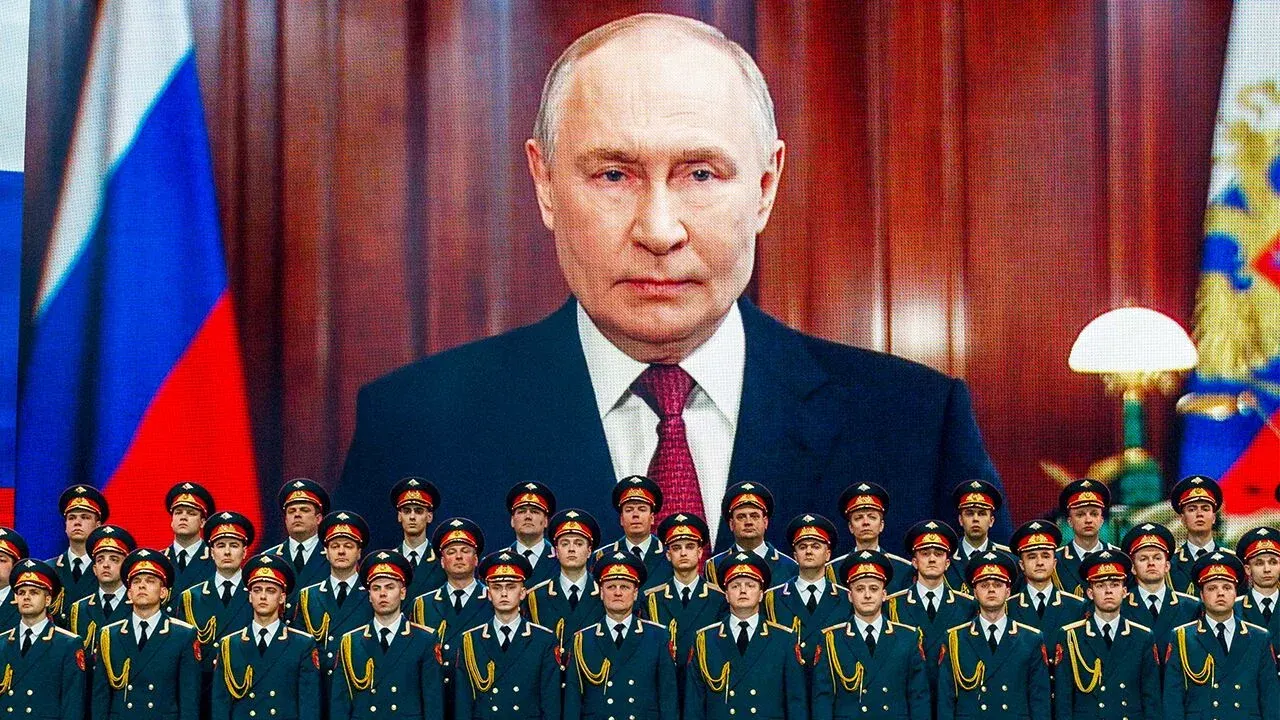
Stalemate pushes the Kremlin toward escalation
For years Russia’s ground forces have barely moved. The war has become an exchange of drone and missile attacks which, while ruinous for Ukraine, are hurting Russia as well. NATO governments have grown more alarmed that Mr Putin sees only one way out of what Russians call a tupik — a dead end — by intensifying the confrontation.
There is no sign he intends to pull back. People near the Kremlin report that after deliberation across several summer weeks, he has settled on escalation.
Warnings and hybrid pressure on NATO
America’s CIA chief, John Ratcliffe, made a surprise flight to Moscow on August 25th. Descriptions diverge over whether he travelled to caution Mr Putin against striking NATO states, or to present a grim appraisal of Russia’s outlook and urge him toward talks.
In the days that followed, tensions multiplied on NATO’s eastern flank. Three days afterward, Finland sought assistance from Swedish planes and naval vessels to watch its Russian frontier for violations. Germany on September 1st publicly attributed a drone incident at Leipzig airport on August 4th to Russia and applied modest penalties. In late August, Romania neutralised a Russian sea drone aimed at a drilling rig in its waters, while Slovakia disrupted a firebomb plot against a drone plant — part of a pattern of hybrid operations against Ukraine’s partners that Western officials are watching closely.
Putin’s answer: blowback and no ceasefire
Mr Putin has broken his quiet over Ukraine’s drone attacks on Russian refineries and online-retail depots. During a speech on August 22nd, he charged Ukraine with opening a Pandora’s box
and vowed blowback on the most sensitive sectors of your economy
. That same day he rejected any idea of stopping the fighting: The special military operation continues.
A long-standing associate of Mr Putin believes he probably read Mr Ratcliffe’s trip as evidence of American frailty. According to that source, the president interpreted Bill Burns’s journey to Moscow in November 2021 — when Joe Biden’s CIA chief cautioned him over invading Ukraine — in the same way.
Survival, not strategy, drives the decision
Nobody can discern what lies inside Mr Putin’s mind. Yet his motives for intensifying, as with the invasion choice, are domestic. His central aim has consistently been safeguarding his own authority, and in the end his survival.
Cracks at home: public fatigue and elite frustration
One Kremlin anxiety involves the fading of the public’s tacit acceptance of the conflict. Far-reaching Ukrainian drone raids, coupled with online curbs, have punctured the façade of ordinary existence. The Levada Centre, an independent polling outfit, reports that 57% of Russians call conditions tense
; those surveyed point to the war, drone raids and absence of any sense of what lies ahead. Mr Putin’s approval score is slipping.
Sentiment within the elite is darker still. The principal grievance, one insider remarks, is lost time: regardless of the result, almost five years amounts to failure. Another speaks of a spreading sense that the tsar has no clothes. None of Russia’s difficulties is deadly for Mr Putin: he commands the financial means and coercive machinery to persist. But appearances count.
Russians calling conditions “tense” — Levada Centre
Additional men Putin is resolved to throw in
Prison term faced by detained hospice founder
Gangster logic: why weakness is not an option
Although Mr Putin may frame his goals in geopolitical terms, his compass is really criminal: never display vulnerability. Russia’s order tolerates much bloodshed, yet does not pardon defeat. He might judge that not securing even his minimal prize — seizing the whole Donbas area of eastern Ukraine — could endanger him physically. (They will hang me,
he once told confidants during the war, an insider says.)
Merely plodding ahead offers no answer. Inertia-driven scenarios are disadvantageous,
one figure in the Russian establishment says: they devour fiscal reserves and political authority.
What escalation could look like
How Russia might escalate remains uncertain. It will probably expand hybrid operations against Ukraine’s partners and strike their resupply lines into Ukraine. Western spy services fear Mr Putin could hit European plants producing weapons for the campaign. But they assess that he seeks no open clash with NATO.
Inside Ukraine, intensification largely implies enlarging what Russia already undertakes. On August 30th, Russia’s Ministry of Defence announced preparations for a huge assault on Ukraine’s power system. Yet Ukraine anticipates such raids.
Concerning the land campaign, Russian voices say Mr Putin is resolved to hurl another 300,000-400,000 men into the meat grinder. Additional troops will likely be enlisted through regional administrations so that political fallout stays local. Officials are already piloting the fresh enlistment model in Penza, a region 750km south-east of Moscow.
Projecting toughness at home
Mr Putin is likewise tightening persecution of alleged internal enemies
, less because they threaten him than to project toughness. Police on September 2nd detained Lidia Moniava, creator of a hospice serving fatally sick children. She confronts a 10-year prison term over a 2023 anti-war social-media entry. Two days before, officials abandoned every charge against Ilya Traber, a St Petersburg businessman, pleading his poor health. Mr Traber, tied to Mr Putin for years, had faced accusation of ordering a murder.
To stay on top of the biggest European stories, sign up to Café Europa, our weekly subscriber-only newsletter.
KEEP THE CONVERSATION GOING
A good story is worth sharing.
Send this story to someone who values the bigger picture.
See more from GlobeBriefly on Google
Choose us as a preferred source in your Google preferences.