Audio
Listen to the article
Last month I gave the main commencement speech at the University of Pennsylvania in Philadelphia, where 250 years ago our founders signed the Declaration of Independence. When I praised the rule of law, a man sprang furiously to his feet, thrust a middle finger at me and stormed out. Such is America in 2026 — and the question is what remains of the city upon a hill.
- America in 2026 is enveloped by anger, polarisation and fear, with declining faith in the founders’ basic tenets.
- The threatened tenets are the rule of law, faith in free and fair elections, and relentless self-criticism and dissent.
- The contested election of 1876 shows the cost of discarding principles; Lincoln’s “bonds of mutual affection” point to repair.
The crowd was jubilant and friendly, with that one exception I was later told about. Before we get too hyperbolic about our current national predicament, it is worth noting that America has endured grave crises before. But what has repeatedly sustained it is adherence — however imperfect — to certain shared founding principles.
During his inaugural address in 1933, at the nadir of the Great Depression, Franklin Roosevelt said of the nation’s troubles: “They concern, thank God, only material things.” In contrast, today’s society suffers not only from inequality in “material things” but from declining faith in some of the most basic tenets that the founders exalted in their debates over the constitution. For much of America’s history, its citizens accepted these so widely that they were almost boilerplate. But some of the earliest, most sacred ideas are almost radioactive in America now.
The rule of law and equal justice
First among these is the rule of law. Unlike in cynical Europe, where corrupt kings often pardoned their friends and locked up their enemies, the revolutionary American generation dreamed that ours would be a land of equal justice in which the judicial system gave out no special favours and no special punishment.
Yet today, perhaps more than ever before, favourable antitrust rulings are lavished on allies of the current administration while the Justice Department indicts its political foes.
Faith in free and fair elections
The second threatened tenet is faith in free and fair elections. When I was in first grade in 1960, our teacher threw a blanket across the tops of two easels to let us cast secret “ballots” for John F. Kennedy or Richard Nixon. Persuaded by my classmates, I cast my first “vote” for Nixon.
In that election, as throughout American history, we experienced some electoral corruption that required rigorous scrutiny. But never before in our history did a substantial number of Americans fear, as polls report today, that a national election might be hamstrung or overturned by federal forces dubiously citing a “national emergency”.
Both Abraham Lincoln during the civil war and Roosevelt during the second world war were advised by some to severely restrict or even cancel elections. These great leaders insisted instead that the balloting proceed, wishing to demonstrate that even during existential crises — both far more grave than any immediate dangers today — America should uphold the letter and the spirit of its democracy, and that its democracy works.
Learning from failures, not hiding them
The third tenet Americans are in danger of losing is equally fundamental. The founders wanted all Americans to pay close attention to the failures as well as the triumphs of our present and past. Unlike absolute monarchs or dictators, they wanted Americans to learn from their mistakes. They believed we would be a better country only if we were relentlessly self-critical and self-correcting.
I don’t find anything that suggests that the founders ever imagined that federal authorities would close down museum exhibits or destroy signs at historic sites — as they now are doing — that tell visitors about shortcomings in the nation’s past, such as the evils of political corruption or enslaving and torturing fellow human beings.
What we think about history and who our heroes are should not be dictated to Americans by the churlish fiat of any four-year federal administration, whether of the left or the right. Neither historians nor citizens should be treated as obedient circus clowns.
In fact, most of the founders considered the dissenter just as patriotic as the American who celebrates an existing president. Weren’t the rebels of 1776 literally dissenting from the British king?
It is not enough to allow dissent. We must demand it!
Senator Robert Kennedy to Berkeley students, 1966
In 1966, amid President Lyndon B. Johnson’s military escalation in Vietnam, Senator Robert Kennedy trenchantly told a receptive crowd of draftable Berkeley students: “It is not enough to allow dissent. We must demand it!”
What remains of the city upon a hill?
The founders envisioned an American political system of honesty, candour, competence, high ethics, compassion, decency and self-sacrifice. Kennedy and Ronald Reagan quoted John Winthrop, an early governor of the Massachusetts Bay Colony, who said that we must always behave like citizens of a “city upon a hill”, with all “eyes” upon us.
Thomas Jefferson dreamed of a political culture so efficient that it would spread around the world. How are we doing in 2026? Do other countries want their political systems to be like ours?
1876: when principles were discarded
If other moments in American history show the resilience of democratic principles under strain, the centennial of the nation’s founding in 1876 shows what happens when those principles are discarded. That year, the severely contested presidential election between Republican Rutherford B. Hayes and Democrat Samuel Tilden was resolved only by a stinking back-room bargain.
Although Tilden had won the popular vote, the Republicans grabbed the presidency by making a hypocritical, sordid commitment to pull federal troops out of the South, abruptly ending Reconstruction.
This corrupt bargain brought a screeching halt to Lincoln’s dream that liberated black Americans might, before long, enjoy their hard-won legal rights. All Americans suffer from that ugly horsetrade to this very day.
Bonds of mutual affection
My prayer for the upcoming anniversary is that we heed George Washington’s desire that all American leaders and citizens strive to heal and unite a fractious nation. No matter how brutal our political differences, we must reaffirm that we are bound by what Lincoln called “our bonds of mutual affection”.
If we recall and re-embrace some of these most profound traditions of American democracy, then in the future some of the tumult and jeering that we see and hear on our 250th birthday will prove to have been a fleeting aberration. As the famous political adage goes, the ills of democracy are best cured by more democracy.■
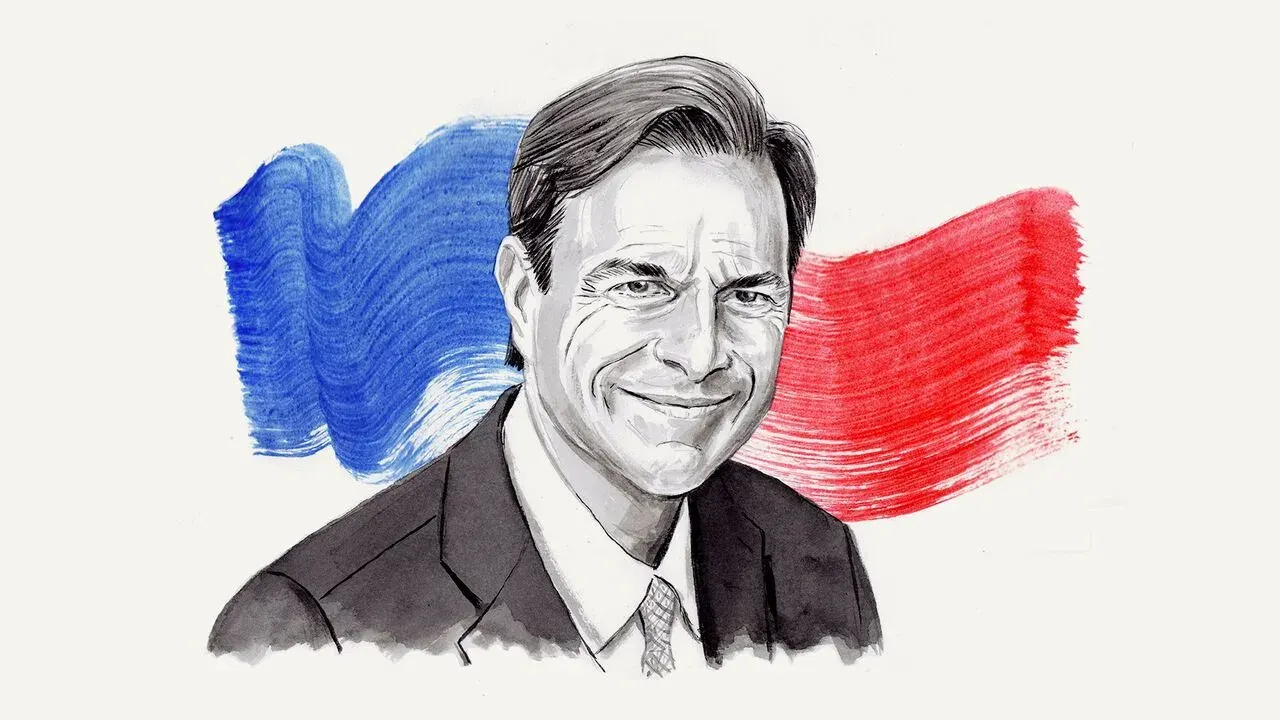
Michael Beschloss is a historian and the author of nine books on the presidency, including “Presidents of War: The Epic Story, from 1807 to Modern Times” (2018).
KEEP THE CONVERSATION GOING
A good story is worth sharing.
Send this story to someone who values the bigger picture.
See more from GlobeBriefly on Google
Choose us as a preferred source in your Google preferences.