Audio
Listen to the article
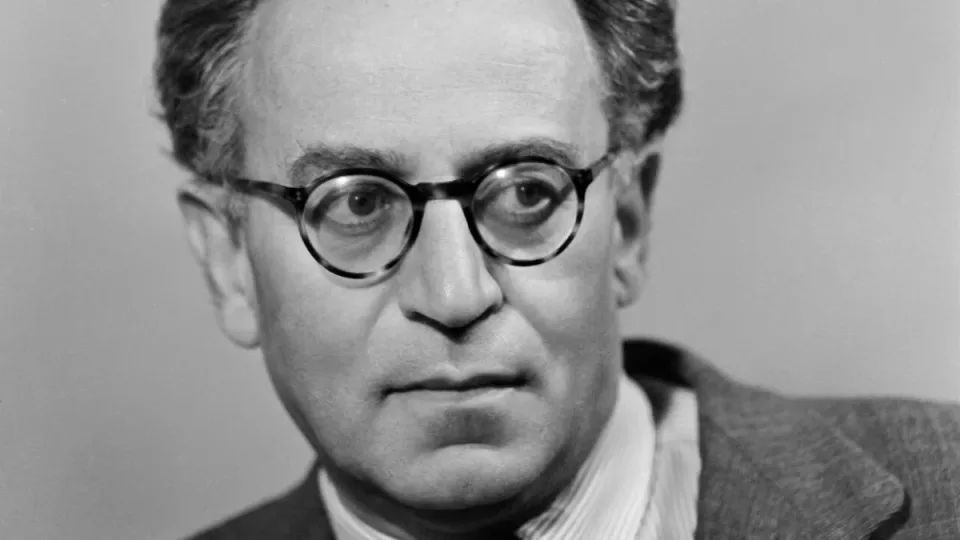
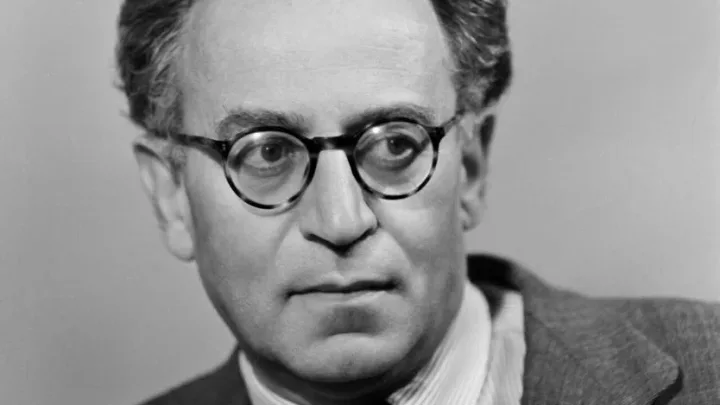
Vasily Grossman, the Soviet writer behind “Life and Fate”, was also the Soviet Union’s most famous Second World War correspondent. News editor Oliver Jones explores his reporting from Stalingrad to Berlin, and asks what makes a truly great war reporter.
- As a correspondent for the Red Army’s Red Star, Grossman witnessed the Soviet retreat of 1941, the Battle of Stalingrad and the fall of Berlin.
- Many of his articles were censored, partially or entirely, raising questions about propaganda, truth and editorial independence.
- His bravery at Stalingrad and attention to rank-and-file soldiers shaped an English collection, “From the Frontline: 1941-45”.
Welcome to a bonus edition of The War Room.
Our resident historian, Richard Cockett, has handed me command of this month’s newsletter to write about one of my favourite subjects. Before becoming a journalist, I did a doctorate in cultural history, which partly focused on the work of Vasily Grossman, a Soviet writer.
Who was Vasily Grossman?
Grossman wrote anti-Stalinist novels such as “Life and Fate”, a war epic that was suppressed by the Soviet authorities in the early 1960s before being smuggled out of the country and eventually published in the West.
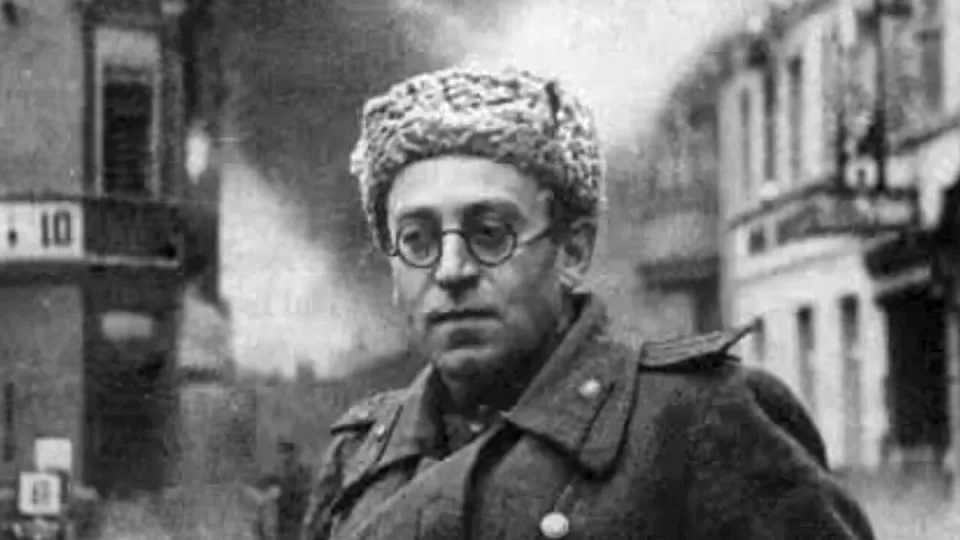
But he was also an intrepid reporter on the eastern front during the second world war. As a correspondent for the Red Army’s newspaper, the Red Star, he witnessed and wrote about the Soviet retreat of 1941, the Battle of Stalingrad and the fall of Berlin.
Grossman also conducted some of the first research into the Holocaust. The Nazis killed his mother in a massacre of the Jewish population of Berdichev, his hometown in Ukraine, in 1941.
From the Frontline: Grossman’s reporting in English
Until recently, reading much of Grossman’s reportage required knowledge of Russian. But an English-language collection of his articles — “From the Frontline: 1941-45”, translated by Robert and Elizabeth Chandler — was published this summer.
I found the book oddly nostalgic. I had encountered many of the included texts and images while conducting research in Moscow. It reminded me of days spent schlepping to archives on the outskirts of the city, thumbing through piles of dusty documents and struggling to use rickety machines for reading microfilms that looked like something from a cold war-era spy film.
Propaganda, censorship and truth at Red Star
More broadly, though, I thought the book raised a question: what makes a truly great war reporter, and does Grossman count?
It’s important to understand the reality of his journalistic career. By writing for the Red Star, Grossman was producing propaganda for the Soviet state. But that doesn’t mean he was ever a Stalinist ideologue. He took the job out of a desire to help his country fend off fascist invasion.
Moreover, he tried to speak the truth as he saw it: many of his articles were censored, either partially or entirely. Yet that only goes to show that his war reportage can’t be considered editorially independent. The authorities used what was published to keep the Red Army informed and motivated as they deemed fit.
Bravery on the western bank at Stalingrad
Still, I’d argue Grossman displayed many admirable journalistic traits. One was personal bravery.
At Stalingrad, many Soviet reporters stayed on the eastern bank of the Volga river, away from the fiercest fighting. But Grossman travelled to the much more dangerous western bank to join the Red Army troops battling the Germans in the city’s ruined streets.
The author thought being close to the action was crucial to being able to describe it.
“Until I have been there [on the western bank], I have no moral right to write about the defenders of Stalingrad.”
Vasily Grossman · On reporting at Stalingrad
A reporter who listened to ordinary soldiers
Another was gauging the views not only of senior officers, but also of rank-and-file soldiers. Grossman had a knack for getting military leaders to talk: the book describes how his colleagues were once amazed by his ability to get a “silent and reserved” Siberian general to speak to him for six hours. But he most valued speaking to lower-ranking troops.
An article entitled “Through Chekhov’s eyes” provides a gripping example. In it Grossman meets a teenage sniper called Anatoly Chekhov, who became famous for terrorising the Germans in Stalingrad. He contrasts the innocence of this young man’s childhood with the gruesome reality of his work. As a child, Chekhov “had not wanted to hurt anything living”, he writes. But “the iron, holy logic” of the war “had turned him into a merciless avenger”.
Why read Grossman now?
So I’d say Grossman’s non-fiction is still well worth your time. But I’m also curious to know who you’d put among the greatest war correspondents of all time? Write to us thewarroom@economist.com. And, of course, we welcome any other questions and feedback on this newsletter.
Readers respond: animals at war
Many thanks for all your emails about last month’s edition on animals at war. Elizabeth in Australia wrote about the valiant deeds of donkeys during the Anzac landings in Gallipoli during the first world war. Indeed, mules and donkeys have probably contributed more to warfare over time than any other animal, carrying munitions and other supplies.
Equally, Karen in Hungary highlighted the role of dogs and rats in detecting mines. This year Cambodia put up a statue honouring Magawa, a rat that sniffed out more than 100 mines in a distinguished career.
Both Rick and Douglas recounted their own stories of plucky pigeons. As a brand new Signal Corp officer in the American army, Douglas was told the inspiring story of Cher Ami from the first world war. Shot in the breast by the Germans, the much-decorated homing pigeon is believed to have flown on to deliver a vital message from the “Lost Battalion”, an isolated group of American troops who were mistakenly being targeted by friendly fire and surrounded by Germans.
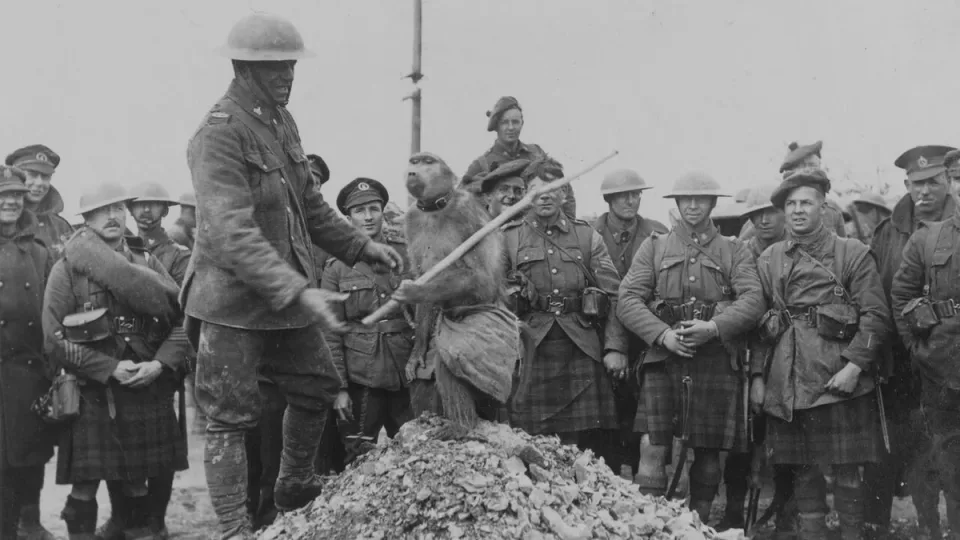
But Richard topped it all with his report of Jackie the Baboon recruited into a South African regiment during the first world war. Jackie was also badly wounded, won a string of decorations for valour and was promoted to corporal. A tall tale? Here is the picture to prove it.
The War Room recommends
Extra suggestions on Vasily Grossman and Stalinism:
Read
Grossman’s best novels have now been translated into English. For those prepared to wade through nearly 2,000 pages of war fiction, it is worth reading not just “Life and Fate” but also its prequel “Stalingrad”. For those who lack the time or stamina, the BBC has helpfully made radio adaptations of both books.
Watch
The aftermath of Joseph Stalin’s terror is not an obvious topic for comedy, as any readers of Grossman’s later works can attest. Yet Armando Iannucci made that the subject of his 2017 satirical film, “The Death of Stalin”. Our review from the time called it a “precarious comedic experiment” and concluded that, oddly, it works.
Visit
For any ultra-keen Grossman fans who find themselves in Cambridge, Massachusetts, Harvard University’s Houghton Library holds an impressive collection of the author’s papers, including a remarkable annotated typescript of his final novel, “Everything Flows”.
Listen
James Riordan made an audio documentary about Grossman’s life and times in 2011, which is still available on the BBC. Meanwhile, the most recent written biography of the author is “Vasily Grossman and the Soviet Century”, by Alexandra Popoff. We reviewed it in 2019.
KEEP THE CONVERSATION GOING
A good story is worth sharing.
Send this story to someone who values the bigger picture.
See more from GlobeBriefly on Google
Choose us as a preferred source in your Google preferences.