Audio
Listen to the article
- America’s left is shifting emphasis from race and gender to class, affordability and economic populism.
- Tabloid mockery of affluent DSA activists highlights a long-running tension over who speaks for working-class politics.
- From Zohran Mamdani in New York to moderate winners in Virginia and New Jersey, Democrats now converge on wages, prices and housing costs.
New York
It remains uncertain whether Mayor Zohran Mamdani, devoted to “the warmth of collectivism”, will usher in an age of abundance for hard-pressed New Yorkers. What is clearer is the political shift beneath the theatre: between Donald Trump’s second inaugural in January 2025 and Mr Mamdani’s first inaugural the next January, America’s left began to move from identity to inequality — from race and gender to class.
The Post’s favourite foil: affluent young socialists
Mr Mamdani’s youthful government has already delighted one audience: conservative followers of the city tabloid, the New York Post, which is confirming their view of progressives by devouring the affluent habits of several of Mr Mamdani’s allies in the Democratic Socialists of America (DSA).
“Anti-rich DSA leader Gustavo Gordillo lives it up in posh $1.5m NYC pad paid for by millionaire parents,” the Post blared last month. Observing that the DSA “railed against property ownership”, the Post delighted in the “lush landscaping” of the townhouse acquired “by his mommy and daddy through a dummy corporation”. The Post subsequently disclosed that Mr Gordillo, the co-chairman of the city chapter of the DSA, pursued art and literature at Yale; that he lost a place on an electricians’ union training scheme for non-attendance; and that his mother operates a silver Porsche.
Further progressive targets have featured Tracy Rosenthal, a proponent of eliminating rent whose father earns a living as a prominent music producer. (“Anti-rent radical and Mamdani pal who is ‘squatting’ in Brooklyn is Grammy nepo baby”.) The Post has labelled Grace Ryan, “a 25-year-old chocolate heiress from Ohio”, as “one of the most shameless” figures in the DSA after she shared online images of herself “puffing a cigar on a boat in a $400 Ralph Lauren stars-and-stripes sweater”. To the Post’s evident delight, Ms Ryan, who aided a victorious left-wing House hopeful during the primary, responded on X with, “Like have y’all never heard of noblesse oblige?”
An old socialist paradox, revived
This is a familiar sport. Ever since Karl Marx depended on Friedrich Engels for both communist theory and textile wealth, radicals have lived off plutocrats while conservatives have ridiculed them for doing so. Socialism has, from its origins, also held a rebellious allure for fashionable members of the bourgeoisie. Stricter socialists have regarded that appeal as the creed’s fatal flaw.
“The worst advertisement for Socialism is its adherents,” grumbled George Orwell in “The Road to Wigan Pier”. The archetypal socialist was either “a youthful snob-Bolshevik” or “a prim little man with a white-collar job” possessing “vegetarian leanings” and, most importantly, “a social position which he has no intention of forfeiting”.
Still, Ms Ryan makes a fair argument concerning noblesse oblige. She might never reside as ordinary citizens do, yet why ought that disqualify her from seeking to assist them? Is that not preferable to the reverse, a chocolate heiress in a $400 sweater who ignores the suffering of poorer Americans, if not actively exploits them?
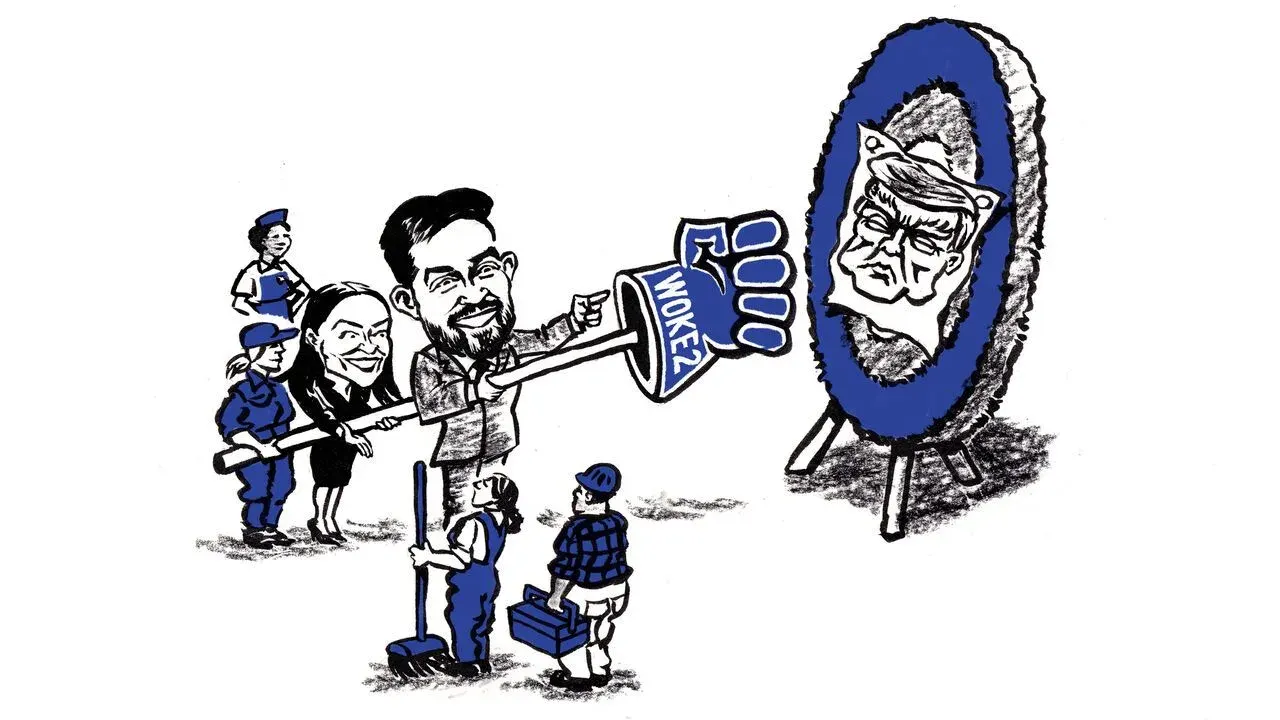
Woke 1 to Woke 2: from identity to class
Beneath the grandstanding lies something potentially significant: a developing contrast between two phases of progressive activism now described as Woke 1 and Woke 2. Any such categories must remain blurred and tentative, because few Democrats have seen fit to directly disavow earlier radical stances they once adopted.
Some have brushed aside past overreach, as when Congresswoman Alexandria Ocasio-Cortez cited another Democrat declaring “Woke 1 was crazy!” and then laughed as though every American was in on the joke. Some have attempted to reinterpret the rallying cries, claiming that “defund the police” did not mean defunding the police. Others have refused to back down; whether they prove to be the vanguard or the dead-enders remains to be seen.
How identity became destiny
Select your preferred drivers, from the dogmatic doctrines that marched out of universities onto social platforms; the ascent of Mr Trump; the #MeToo movement; or the death of George Floyd under a policeman’s knee in 2020. Together these forces pushed the left toward a fixation on racism and gender bias. Identity became destiny. The poorest white person had privileges denied to the wealthiest black one.
In theory the social-justice movement focused on policing; in practice it became obsessed with other preoccupations of America’s multiracial elite, such as preferential admissions to top schools. For prim little people with white-collar jobs, calling out advantages based on race became a way to prove enlightenment; so did disdaining the deplorables who voted for Mr Trump. Any true Marxist would have seen a classic attempt to split the working class, but Democratic leaders embraced this divisive politics.
Why affordability won the argument
Then arrived fresh consequences and fresh origins. Kamala Harris lost in 2024 and Mr Trump demonstrated growing support among non-white working-class voters. Mr Trump cracked down on diversity, equity and inclusion programmes and the Supreme Court struck down race-conscious admissions. Democratic activists became outraged by injustice in Gaza instead of in America.
Perhaps most important, Mr Mamdani won with an inclusive message about making life more affordable — as did moderate Democratic candidates for governor in Virginia and New Jersey.
Despite the rivalry between progressives and moderates, their platforms converge around the precariat, if not the proletariat. From Georgia to Alaska, Democrats are all economic populists now, calling for higher wages, lower prices and more affordable health care. Victims and villains are judged not by the colour of their skin but by the content of their bank accounts. Billionaires are the bad guys, and in the capacious definition in use across the Democratic spectrum, anyone who works to pay their bills is working-class.
This may not, in the end, revive the Democrats, let alone rescue struggling Americans. But if it does, the party will have at least some youthful snob-Bolsheviks to thank for helping remind it of the sorts of things it once stood for. ■
KEEP THE CONVERSATION GOING
A good story is worth sharing.
Send this story to someone who values the bigger picture.
See more from GlobeBriefly on Google
Choose us as a preferred source in your Google preferences.